
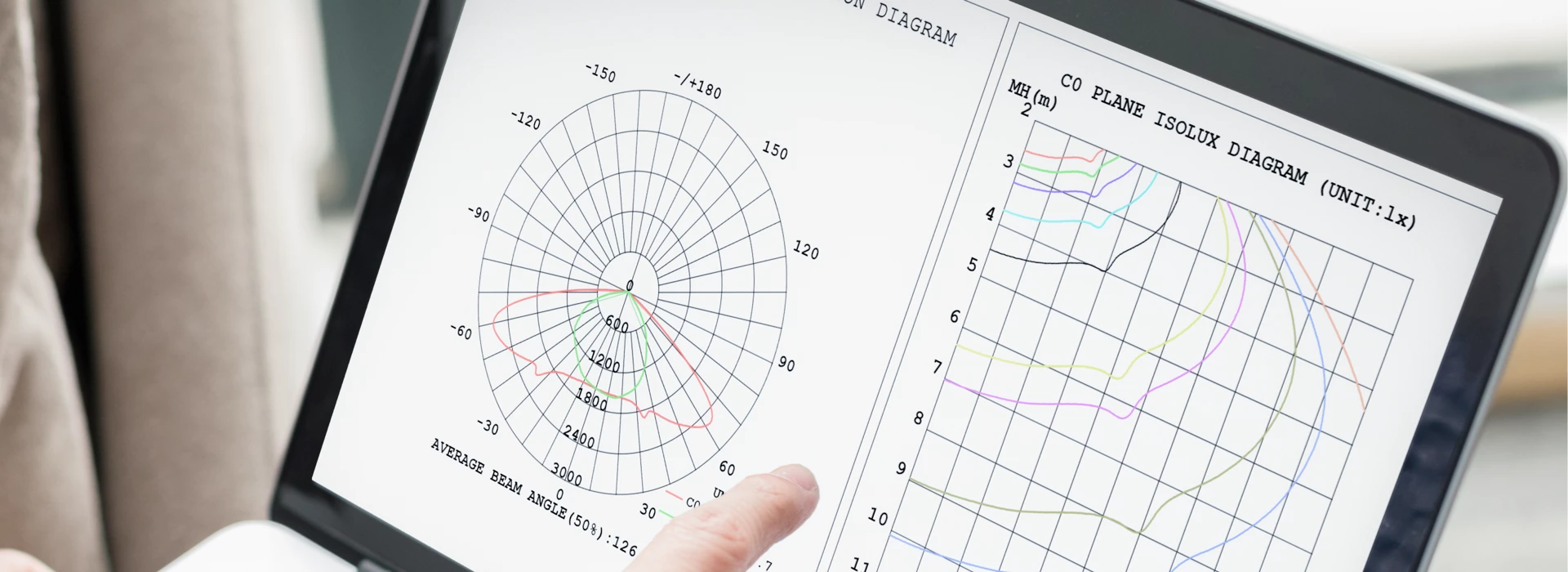
Road Lighting Design, DIALux Simulation & Solar Street Light Engineering FAQ
Proper engineering design is the foundation of a reliable solar street lighting system.
Unlike simple product selection, engineering design focuses on lighting performance, road safety standards, pole configuration, spacing, and environmental adaptation.
This section answers the most common engineering and lighting design questions from EPC contractors, consultants, and municipal planners.
Why Engineering Design Matters
A solar street lighting system is not defined by wattage alone.
A complete engineering system that must ensure:

Poor design can lead to:


Engineering Design Principles
A professional solar lighting design always balances:
Lighting Performance
Energy Balance
Structural Design
Environmental Adaptation
Product Selection FAQ
Engineering Design
What is solar street light engineering design?
Solar street light engineering design refers to the process of calculating and configuring a complete lighting system based on road conditions, lighting standards, and environmental factors.
It includes:
- Road width analysis
- Pole height selection
- Luminaire spacing
- Lux level calculation
- Solar energy balance design
- Battery autonomy planning
It ensures the system performs reliably under real-world conditions.
How is road lighting design calculated?
Road lighting design is calculated based on:
- Road classification (residential, municipal, highway)
- Required illuminance (lux level)
- Pole height
- Pole spacing
- Luminaire distribution angle
- Surface reflectance
In professional projects, lighting simulation tools such as DIALux are used to ensure compliance with engineering standards.
What is DIALux used for in solar street lighting?
DIALux is a professional lighting simulation software used to model road lighting performance before installation.
It helps engineers:
- Simulate light distribution
- Verify lux levels
- Optimize pole spacing
- Improve uniformity
- Reduce over-design costs
It is widely used in municipal and highway lighting projects.
What is the standard pole height for road lighting?
Pole height depends on road type:
- Residential roads: 4–6 meters
- Community roads: 6–8 meters
- Municipal roads: 8–12 meters
- Highways: 12–15 meters or higher
Higher poles require stronger luminaire output and optimized spacing design.
How is pole spacing determined?
Pole spacing is determined by:
- Pole height
- Luminaire power
- Beam angle
- Required lux level
- Road width
Typical spacing ranges:
- Residential roads: 20–30m
- Municipal roads: 25–35m
- Highways: 30–50m
Spacing must be verified through lighting simulation for accuracy.
What lux level is required for road lighting?
Recommended lux levels vary by road type:
- Residential roads: 5–10 lux
- Urban roads: 10–20 lux
- Main roads: 15–30 lux
- Highways: 20–50 lux
Engineering design ensures uniformity, not just peak brightness.
Can solar street lights meet highway lighting standards?
Yes, but only with proper engineering design.
- Highway systems require:
- High-power split solar systems
- Large battery capacity
- High-efficiency LED modules
- Optimized pole spacing
- DIALux-based design validation
What are the key design factors in Africa projects?
African projects require additional considerations:
- High temperature resistance
- Long rainy season backup design
- Dust and humidity protection
- Off-grid reliability
- Cost optimization for large-scale deployment
Need a Professional Lighting Design?
We provide engineering-based solar street lighting design for municipal roads, highways, and rural electrification projects.
Related Resources
Product Selection Guide
Engineering Design FAQ
Solar Components FAQ
Performance FAQ
Installation FAQ
Africa Projects FAQ
OEM & Distribution
Shipping & Delivery
Warranty & Support
Distributor Cooperation
Project Inquiry
Request a Quote
The messenger of light & power conversion.
© 2026 Queneng Light
 Jason Qiu
Queneng
Queneng
Queneng
Queneng