

Solar Street Light Product Selection Guide & FAQ
Choosing the right solar street lighting system is critical for ensuring long-term performance, stable illumination, and maximum return on investment.
This guide explains how to select the most suitable system based on road type, lighting requirements, climate conditions, and project scale—especially for municipal, highway, and rural electrification projects across Africa.
Why Product Selection Matters
Solar street lighting is not a one-size-fits-all solution.
Incorrect system selection can lead to:

A properly engineered system ensures:


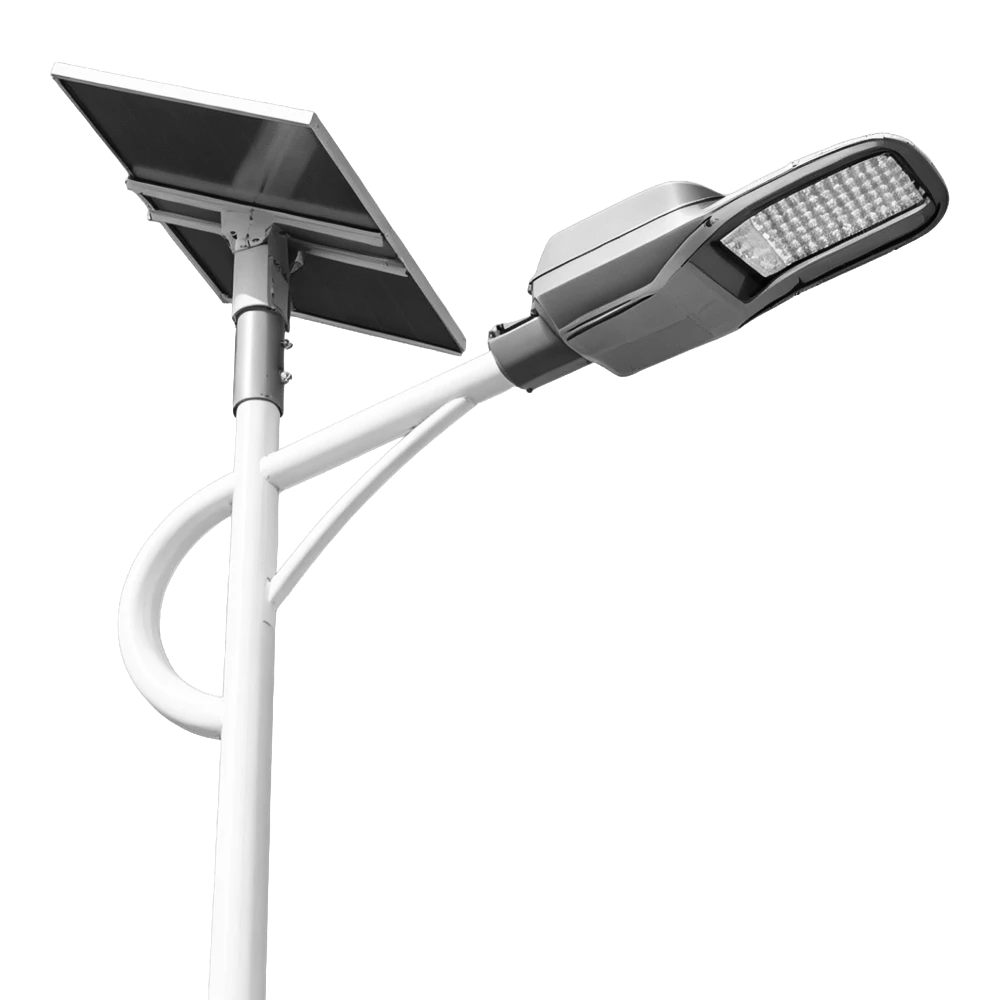
All-in-One vs Split Solar Street Light
| Factor | All-in-One | Split |
| Cost | Lower | Higher |
| Flexibility | Low | High |
| Power Output | Medium | High |
| Maintenance | Low | Low |
| Best Use | Residential / Small | Municipal / Highway |
Recommended Applications
| Project Type | Recommended Product |
| Residential Roads | All-in-One |
| Rural Roads | All-in-One / Split |
| Municipal Roads | All-in-One / Split |
| Highways | All-in-One / Split |
| Industrial Parks | Split |
Selection Workflow

Key Selection Factors
Climate
Engineering Design
Energy System
Need A Professional Solar Street Light Design?
With our flexible product portfolio, expert engineering support, and fast, accurate quotes, we can tailor solar street lighting solutions featuring high-efficiency solar panels and long-life batteries (5–10 years) specifically for your urban and rural projects in Africa.
Product Selection FAQ
Product Selection
What is an All-in-One solar street light?
An all-in-one solar street light integrates the LED module, solar panel, lithium battery, and MPPT controller into a single compact unit.
It is designed for fast installation, low maintenance, and cost efficiency.
Best Applications:
- Residential roads
- Community streets
- Parking lots
- Parks and pathways
- Schools and small projects
Recommended When:
- Fast deployment is required
- The budget is limited
- Medium lighting demand
What is the difference between All-in-one and Split solar street lights?
All-in-one systems are compact and easy to install, while split systems separate components for higher performance and flexibility.
| Feature | All-in-One | Split |
|---|---|---|
| Installation | Very Easy | Moderate |
| Power Capacity | Medium | High |
| Battery Size | Limited | Flexible |
| Highway Use | Not Recommended | Recommended |
| Municipal Use | Suitable | Best Choice |
| Performance | Good | Excellent |
How do I choose the correct wattage?
Wattage should not be selected alone. It depends on engineering design factors such as:
- Road width
- Pole height
- Spacing
- Illuminance requirements (Lux)
- Local climate conditions
- Operating hours
👉 Proper selection requires lighting design, not only product power.
Which system is best for municipal projects?
Municipal projects require stable, high-performance systems.
Recommended configuration:
- Split solar street light system
- High-efficiency LED module
- MPPT controller
- LiFePO₄ battery
- Anti-corrosion structure
Key focus:
✔ Stability
✔ Uniform lighting
✔ Long service life
Are solar street lights suitable for Africa?
Yes. Solar street lights are highly suitable for Africa due to abundant solar resources and increasing demand for off-grid infrastructure.
However, system design must consider:
- Rainy season duration
- High temperature conditions
- Dust and humidity
- Road classification
Proper engineering design is essential for long-term performance.
How many rainy days backup is needed?
How many rainy days' backup is needed?
Typical recommendations:
- Normal regions: 3–5 days backup
- Heavy rainy regions: 5–7 days backup
- Critical infrastructure: 7+ days backup
Battery sizing must match local climate conditions.
Can solar street lights work in cloudy weather?
Yes. High-efficiency solar panels and MPPT controllers allow operation during cloudy days.
Performance depends on:
- Solar radiation level
- Battery capacity
- System efficiency
How long do solar street lights last?
A high-quality system typically lasts
- LED module: 50,000+ hours
- Battery: 5–8 years
- System lifespan: 8–15 years
Proper maintenance can extend lifespan further.
Need a Professional Solar Street Light Solution?
Every project is different. Our engineering team can design a complete solar street lighting system based on your road conditions, climate environment, and project budget.
Related Resources
Product Selection Guide
Engineering Design FAQ
Solar Components FAQ
Performance FAQ
Installation FAQ
Africa Projects FAQ
OEM & Distribution
Shipping & Delivery
Warranty & Support
Distributor Cooperation
Project Inquiry
Request a Quote
The messenger of light & power conversion.
© 2026 Queneng Light
 Jason Qiu
Queneng
Queneng
Queneng
Queneng