
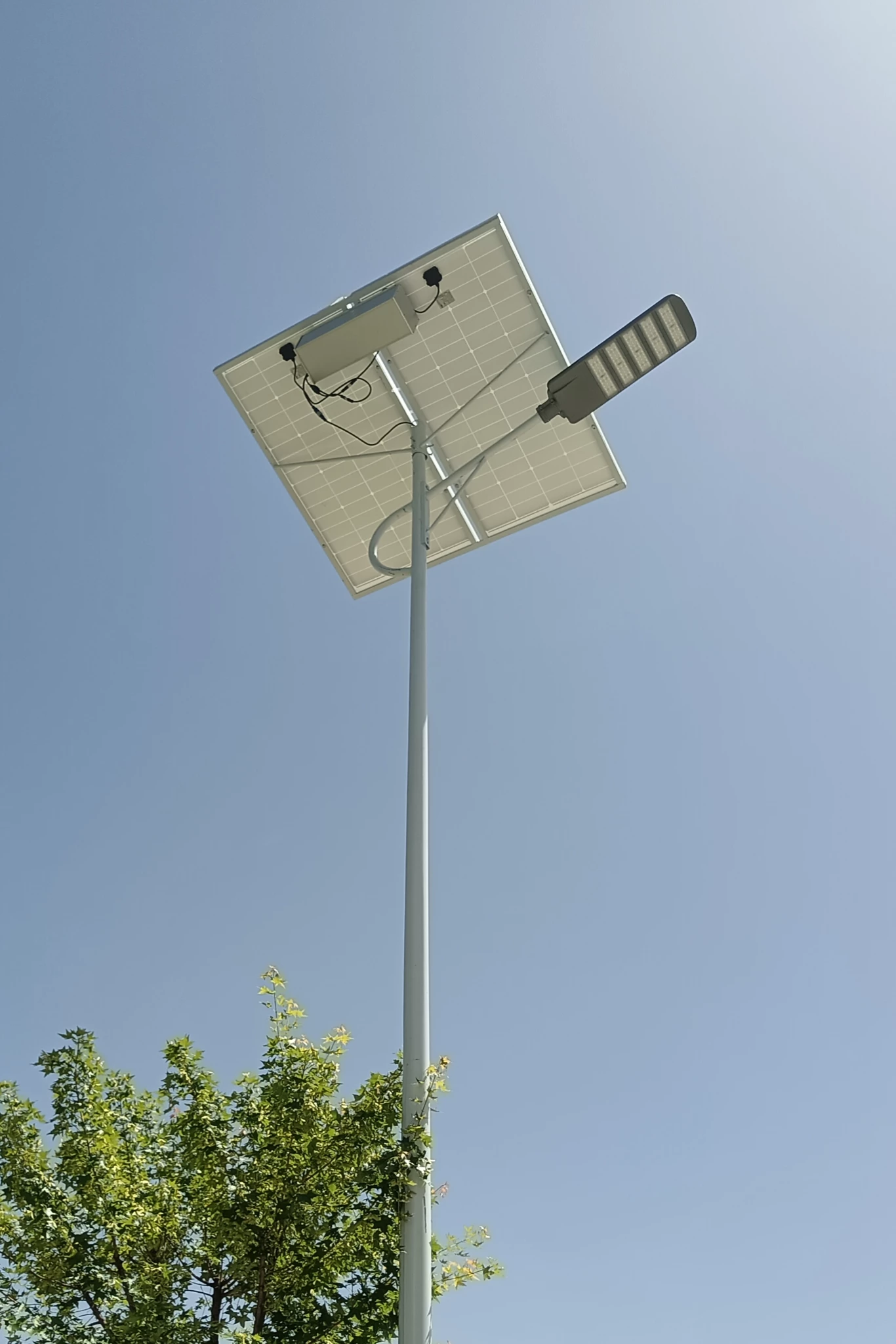
Solar Street Light Cost Analysis and ROI Guide
For many years, solar street lighting was often viewed as a niche solution mainly used in remote villages or small off-grid applications.
That perception has changed rapidly.
Today, solar street lighting systems are being deployed across municipal roads, highways, industrial parks, residential communities, mining areas, and large-scale infrastructure projects worldwide.
The reason is no longer only environmental sustainability.
It is economics.
As electricity prices continue rising and infrastructure construction becomes more expensive, governments, contractors, and developers are paying closer attention to long-term operational costs instead of simply comparing upfront equipment pricing.
And this is where solar street lighting starts becoming financially attractive.
At first glance, many buyers still assume solar street lights are expensive.
After all, a complete system includes:
- • solar panels
- • lithium batteries
- • LED fixtures
- • intelligent controllers
- • structural mounting systems
Compared to a conventional street lamp fixture alone, the initial quotation may appear significantly higher.
But experienced infrastructure planners rarely evaluate a project based only on fixture cost.
Because in real-world roadway projects, the lighting fixture is often only a small part of the total investment.

- The Hidden Cost Behind Traditional Street Lighting Systems
- Why Low-Cost Solar Street Lights Can Become Expensive Later
- Battery Technology Quietly Determines Long-Term ROI
- Installation Cost Changes the Entire Financial Calculation
- ROI Is No Longer Just About Electricity Savings
- Different Projects Require Different Cost Priorities
- Why Long-Term Stability Usually Creates Better Financial Value
- Conclusion
- FAQ
The Hidden Cost Behind Traditional Street Lighting Systems
A traditional roadway lighting project usually involves far more than installing lamps on poles.
Once underground electrical work begins, project complexity increases quickly.
- Road excavation.
- Cable trenching.
- Conduit protection.
- Transformer installation.
- Utility coordination.
- Electrical distribution cabinets.
And in some urban projects, traffic management becomes an additional construction cost by itself.
Many first-time buyers underestimate how much infrastructure work is required before the lights even turn on.
In several municipal projects, contractors eventually discover that underground electrical installation costs more than the lighting fixtures themselves.
Especially for:
- newly developed roads
- expanding suburban infrastructure
- remote highways
- industrial development zones
The cost of extending electrical infrastructure can become substantial.
This is one of the reasons solar street lighting systems are increasingly preferred in areas where grid expansion is slow, unstable, or expensive to maintain.
Because solar systems operate independently, they remove much of the underground electrical complexity from the project.
And sometimes, that changes the economics entirely.

Why Low-Cost Solar Street Lights Can Become Expensive Later
Not every solar street light delivers the same long-term performance.
This is where many procurement mistakes begin.
On a quotation sheet, two products may look surprisingly similar.
Similar wattage.
Similar brightness.
Similar product photos.
But six months after installation, the difference becomes obvious.
One project continues operating normally.
The other starts experiencing dim lighting, shortened operating hours, unstable charging during cloudy weather, or battery failures during rainy seasons.
Usually, the problem is not visible from the outside.
It comes from the internal system design.
Some low-cost systems reduce pricing by compromising on components such as:
- battery reserve capacity
- controller charging efficiency
- waterproof sealing
- heat dissipation structure
- aluminum housing thickness
- LED chip quality
These reductions may lower procurement cost initially, but they often increase long-term operational risk.
And for large roadway projects, repeated maintenance is rarely cheap.
Sending maintenance teams back across highways or municipal road networks multiple times per year can quickly eliminate any savings achieved during procurement.
Battery Technology Quietly Determines Long-Term ROI
From a technical perspective, battery performance has one of the largest impacts on solar street lighting ROI.
But many buyers only realize this after installation.
A system may perform perfectly during the first few months.
Then gradually, nighttime lighting duration becomes shorter.
Brightness weakens during consecutive cloudy days.
Some units begin shutting down earlier than expected.
In many cases, the root issue is not the LED fixture itself.
It is battery degradation.
This is why LiFePO₄ lithium batteries are now widely preferred for professional infrastructure projects.
Not because they are simply “newer technology.”
But because they provide:
- longer charging cycle lifespan
- improved thermal stability
- better high-temperature resistance
- lower maintenance frequency
- more stable outdoor performance
For projects deployed in tropical climates or regions with long rainy seasons, battery stability often matters more than peak brightness itself.
And experienced engineers know this.

Installation Cost Changes the Entire Financial Calculation
One of the biggest financial advantages of solar street lighting is installation simplicity.
Traditional lighting systems rely heavily on underground electrical engineering.
Solar systems do not.
That difference becomes increasingly important as project scale grows larger.
A contractor installing lighting across a short commercial street may not notice the difference immediately.
But once projects expand into:
- municipal road networks
- industrial zones
- mining infrastructure
- highways
- rural road systems
Installation logistics start affecting the total budget significantly.
Some infrastructure contractors now prefer solar lighting not because the fixture itself is cheaper, but because the overall project becomes easier to deploy.
No large-scale trenching.
Less underground wiring.
Reduced utility coordination.
Faster installation schedules.
And in remote regions, avoiding long-distance electrical infrastructure can dramatically reduce construction difficulty altogether.
ROI Is No Longer Just About Electricity Savings
In the past, solar lighting ROI discussions focused mainly on energy savings.
Today, the conversation is broader.
Infrastructure developers are increasingly evaluating long-term operational stability instead of simply comparing electricity bills.
The real ROI often comes from multiple combined factors:
- reduced infrastructure construction
- lower maintenance frequency
- simplified installation
- reduced dependence on unstable electrical grids
- faster deployment speed
- lower long-term operational risk
This is especially important in regions where electrical infrastructure maintenance itself is expensive or unreliable.
Some municipalities now evaluate outdoor lighting projects using total lifecycle cost instead of procurement cost alone.
That changes procurement strategy completely.
Because a slightly higher upfront investment may eventually become the lower-cost solution over five to ten years of operation.
Different Projects Require Different Cost Priorities
Not every roadway project has the same operational priorities.
A highway project may prioritize lighting stability and long-distance visibility.
A rural road project may focus more heavily on installation simplicity and grid independence.
An industrial park may prioritize lower maintenance frequency because servicing interruptions affect operations.
This is why professional solar lighting design is rarely based only on wattage.
Experienced project planners usually balance multiple factors together:
- roadway conditions
- local climate
- battery autonomy
- installation logistics
- maintenance accessibility
- environmental exposure
- long-term operational expectations
The most successful projects are often the ones designed around real operating conditions instead of simply minimizing upfront cost.

Why Long-Term Stability Usually Creates Better Financial Value
Some buyers still evaluate lighting systems using only procurement spreadsheets.
But infrastructure projects are not judged only by purchase orders.
They are judged years later — after installation teams leave, after rainy seasons arrive, and after systems face real outdoor operating conditions.
And this is where long-term reliability becomes part of the financial calculation itself.
A stable system reduces maintenance pressure.
A reliable battery reduces replacement frequency.
A durable waterproof structure reduces operational risk.
Over time, reliability itself becomes an economic advantage.
Projects that usually achieve stronger ROI performance tend to prioritize:
- stable charging efficiency
- professional waterproof protection
- reliable battery systems
- durable structural engineering
- lower maintenance frequency
- Not simply the lowest unit price.
Conclusion
Solar street lighting projects should never be evaluated only through initial product pricing.
The true financial value of a solar lighting system comes from long-term operational stability, reduced infrastructure dependency, simplified installation, and lower maintenance requirements over time.
For municipal roads, highways, industrial zones, and large-scale infrastructure projects, solar street lighting is increasingly becoming a strategic infrastructure investment rather than simply an energy-saving product.
And as infrastructure costs continue rising globally, long-term ROI is becoming far more important than short-term procurement savings.
FAQ
1. Are solar street lights more expensive than traditional street lights?
The initial equipment cost may be higher, but solar street lights often reduce long-term expenses by eliminating electricity bills, underground wiring, and many infrastructure-related costs.
2. What affects the cost of a solar street lighting project?
Major factors include:
- wattage
- battery capacity
- solar panel size
- controller technology
- waterproof protection
- pole height
- installation environment
3. How long does it take for solar street lights to achieve ROI?
ROI varies depending on project size, electricity cost, maintenance savings, and environmental conditions, but many projects recover investment within several years.
4. Why are LiFePO₄ batteries preferred for solar street lights?
LiFePO₄ batteries provide a longer lifespan, improved outdoor stability, better high-temperature resistance, and lower maintenance frequency compared to traditional battery technologies.
5. Do solar street lights reduce maintenance costs?
Yes. High-quality systems usually require less maintenance because they eliminate underground electrical infrastructure and use long-life LED and lithium battery systems.
6. Are solar street lights suitable for remote areas?
Yes. Solar lighting systems are widely used in rural roads, highways, mining areas, and off-grid infrastructure projects because they operate independently without utility power.
Get a Configuration Quote
Please let us know your specific application scenario and product requirements—we will send you a detailed product specifications list and a reference quote within 24 hours.
More from

How to Choose the Right Solar Street Light System
Choosing the right solar street light system is essential for achieving reliable outdoor lighting performance, long battery lifespan, and stable nighttime illumination.
Whether the project is for municipal roads, highways, industrial parks, villages, commercial spaces, or public infrastructure, selecting the proper solar street lighting configuration directly affects energy efficiency, installation costs, maintenance requirements, and long-term operational stability.
This guide explains the key factors that should be considered when choosing a solar street lighting system for different outdoor applications and environmental conditions.

MPPT vs PWM Controllers for Solar Street Lighting Systems
The solar charge controller is one of the most critical components in a solar street lighting system. It directly affects charging efficiency, battery lifespan, and system reliability.
Two commonly used technologies are MPPT (Maximum Power Point Tracking) and PWM (Pulse Width Modulation) controllers.
This article explains their differences and helps you choose the right solution for solar street lighting projects.

Solar Street Light Installation Guide for Roads and Infrastructure Projects
Installing solar street lights is often described as a straightforward process.
On paper, it looks simple: assemble the pole, fix the solar panel, connect the battery, and test the system.
But in real infrastructure projects, installation is rarely that clean.
Once engineers arrive on site, they are usually dealing with uneven road conditions, unexpected shading issues, unstable soil for foundations, transportation limitations, and last-minute design adjustments based on actual field conditions.
This is why installation quality often determines the real lifespan and performance of a solar street lighting system more than product specifications alone.
A well-designed system can still perform poorly if installation is not handled correctly. On the other hand, a properly installed system can often outperform expectations even in challenging environments.
Projects mentioned in this Blog


Building Outdoor Infrastructure in Challenging Environments?
High temperature, long rainy seasons, unstable power supply, and remote installation conditions require more than standard lighting products.
Queneng provides durable solar street lighting systems engineered for demanding outdoor environments and long-term infrastructure operation.
The messenger of light & power conversion.
© 2026 Queneng Light
 Jason Qiu
Queneng
Queneng
Queneng
Queneng